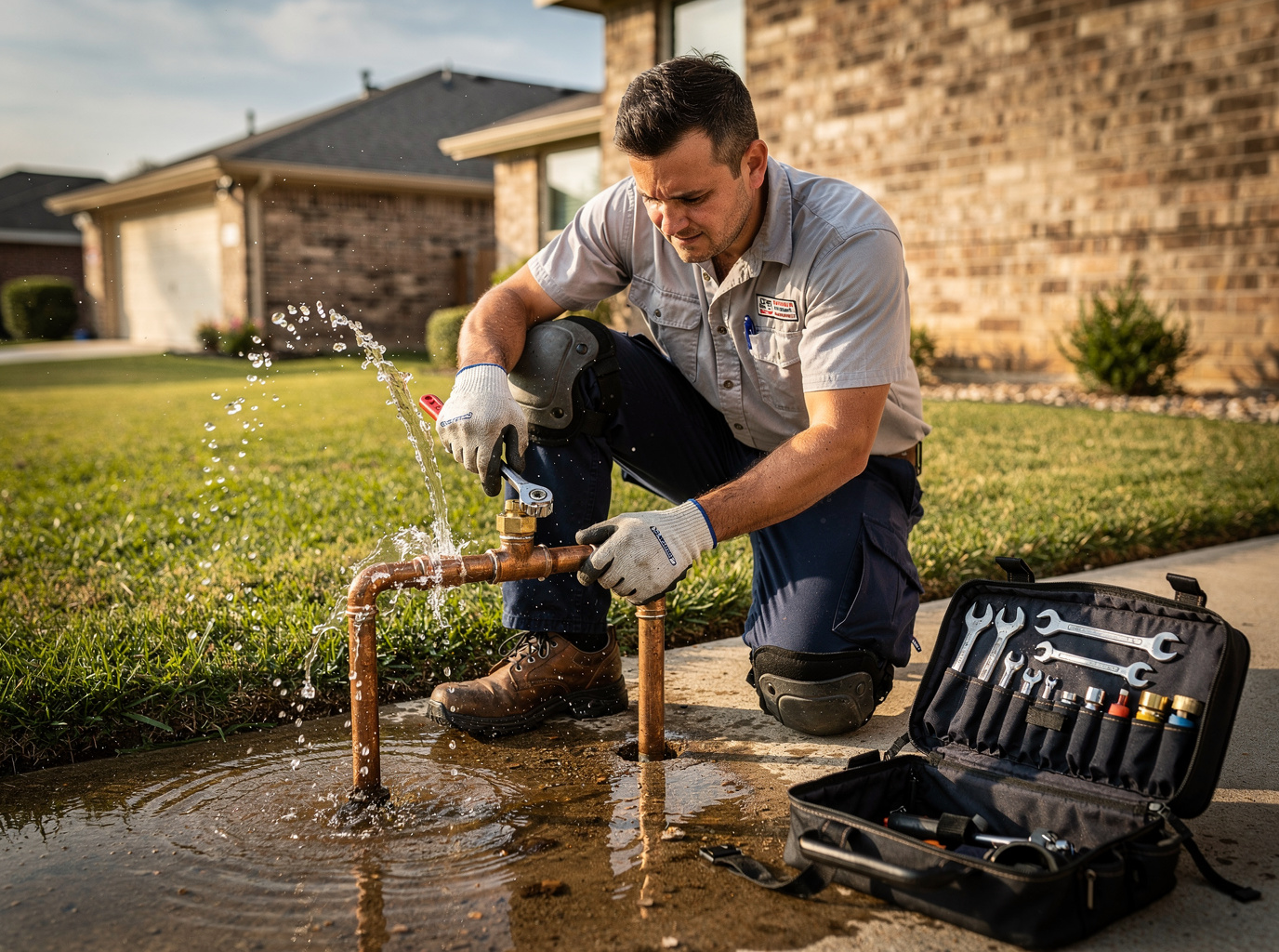
Fort Worth homes built before 1970 in Arlington Heights and the Cultural District often have galvanized steel or early copper lines that corrode from decades of hard water exposure. When a line bursts, water travels quickly through pier-and-beam crawl spaces common in these neighborhoods, soaking subfloors before homeowners notice. The humid subtropical climate means residual moisture lingers longer than in drier regions, raising the risk of hidden mold growth within 48 hours if extraction and drying are incomplete.
Tarrant County clay soils expand and contract with the area's occasional winter freezes and spring rains, stressing underground supply lines near the Stockyards and TCU Stadium. Slab leaks from these shifts require concrete scanning before any repair to avoid unnecessary demolition. Technicians at 505 Main St carry moisture meters calibrated for local humidity levels so they can confirm drywall and insulation reach 12 percent or lower before closing walls.
Emergency shutoff is rarely straightforward in older Downtown buildings where main valves may be corroded or buried under additions. Crews isolate the section, install shark-bite or soldered replacements rated for 150 psi, then run negative-air machines to pull moisture from behind baseboards. Leaving even small pockets of damp insulation in a TCU-area rental can trigger insurance claims months later when tenants report musty odors.
Technician insight
In Fort Worth the thing that catches most people out with burst pipe repair is the way clay soils around the Stockyards and Mansfield shift after a hard rain, pulling old galvanized joints apart even when temperatures stay above freezing. Homeowners often think shutting the main valve ends the problem, but water trapped behind plaster in Arlington Heights walls keeps feeding mold for weeks if we do not pull baseboards and run air movers.
Cultural District Home Supply Line Failure
A 1962 pier-and-beam house near the Kimbell Art Museum lost a bathroom supply line overnight. Water had wicked into oak subflooring and insulation. We isolated the line, replaced the corroded section with PEX, extracted standing water from the crawl space, and ran dehumidifiers for three days until readings stabilized. The owners avoided floor replacement by catching it before cupping set in.
Burst Pipe Repair Services We Offer
✓Slab Leak Detection and Repair
Electronic listening and thermal imaging locate leaks under concrete slabs common in Arlington Heights homes, followed by targeted epoxy or copper rerouting.
✓Crawl Space Burst Extraction
Rapid water removal from pier-and-beam foundations in Stockyards and Cultural District properties using submersible pumps and air movers to prevent joist rot.
✓Kitchen and Bath Supply Line Replacement
Full replacement of failed polybutylene or aged copper lines feeding sinks and toilets, including shutoff valve upgrades to meet current Tarrant County codes.
✓Attic Pipe Burst Drying
Ceiling and insulation drying after upstairs supply lines freeze and split, using dehumidifiers sized for Fort Worth summer humidity loads.
✓Emergency Main Shutoff Service
On-site location and operation of buried or corroded main valves in pre-1960 Downtown buildings when a burst occurs after hours.
Burst Pipe Repair Cost in Fort Worth, TX
| Service | Typical Range | What Affects It |
|---|---|---|
| Initial Assessment And Moisture Mapping | $125–$225 | Higher when crawl space entry or slab scanning is needed |
| Exposed Pipe Repair | $350–$650 | Varies by pipe diameter and whether soldering or crimping is used |
| Slab Or Wall Access And Repair | $800–$1,600 | Includes concrete cutting, reroute, and patch |
| Full Drying Package | $600–$1,200 | Based on square footage and number of days equipment runs |
Ranges are typical for Fort Worth, TX and confirmed with an exact written quote before any work starts.
How it works
- 1
On-Site Assessment
Technician maps moisture with meters, identifies pipe material, and checks for slab or crawl-space access in the specific Fort Worth neighborhood.
- 2
Isolation And Containment
Main or section valve shutoff, followed by plastic barriers to limit water migration into unaffected rooms.
- 3
Targeted Pipe Repair
Corroded section cut out and replaced with code-compliant copper or PEX, pressure tested before walls are closed.
- 4
Drying And Verification
Industrial drying equipment runs until readings drop below 12 percent, then final walkthrough with homeowner.
Pricing
Cost depends on access difficulty, pipe location, and drying time required in Tarrant County homes.