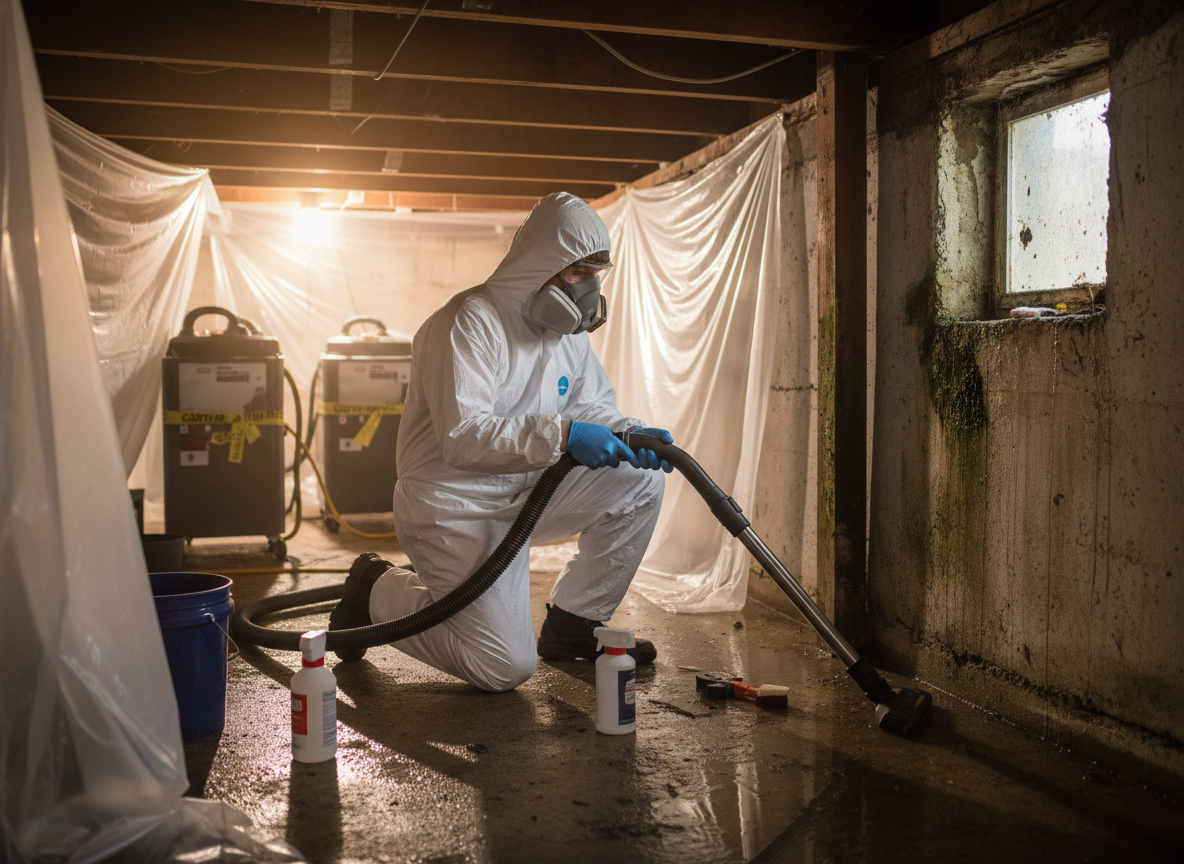
Fort Worth's humid subtropical climate brings hot summers and mild winters that keep indoor moisture levels elevated long after a leak or flood event. Homes in Arlington Heights and the Stockyards often feature older plaster, lath, and crawl spaces where moisture lingers behind finishes. This environment allows mold to establish quickly on drywall, subfloors, and HVAC components common in Tarrant County stock built before modern vapor barriers.
When water enters from roof leaks near Sundance Square or foundation seepage in Cultural District properties, mold colonies can spread through shared wall cavities and attic spaces within days. Remediation requires isolating affected zones, removing porous materials, and drying to below 50 percent relative humidity before any reconstruction. Failure to address hidden moisture in these older homes frequently leads to recurrence during the next humid season.
Post-storm events that affect nearby Mansfield and Keller properties often introduce mold through saturated insulation and ductwork. Technicians must verify clearance with moisture meters and air sampling because Fort Worth's mild winters allow spores to remain active year-round rather than going dormant. Proper containment prevents cross-contamination to unaffected rooms during removal.
Local building practices in TCU-area homes with slab-on-grade construction can trap moisture under flooring when leaks occur, requiring targeted removal of baseboards and affected underlayment. Addressing these conditions prevents secondary damage to electrical and plumbing runs that run through the same cavities.
Technician insight
In Fort Worth the thing that catches most people out with Mold Remediation is how our humid subtropical summers let hidden mold keep growing behind plaster in Arlington Heights and Stockyards homes long after the original leak dries up. Homeowners often stop at visible spots without pulling baseboards or checking HVAC returns, so the colonies return the next mild winter.
Hidden Growth After Roof Leak In Cultural District
A homeowner in the Cultural District noticed musty odors weeks after a roof repair. Inspection found mold colonies behind drywall and in attic insulation where humid air had condensed. Containment was established, affected materials removed, and the space dried before new insulation and drywall were installed. Clearance testing confirmed safe levels before the homeowner returned.
Mold Remediation Services We Offer
✓Black Mold Removal
Removes Stachybotrys and other toxic mold colonies from walls and ceilings in older Downtown and Stockyards properties while preventing spore release into living spaces.
✓Attic Mold Remediation
Treats mold growth on rafters and insulation caused by roof leaks common in Arlington Heights homes during Fort Worth's humid summers.
✓HVAC Mold Cleaning
Cleans mold from ductwork and coils that spreads through Tarrant County homes after prolonged humidity or condensate line failures.
✓Basement and Crawl Space Mold Treatment
Remediates mold in below-grade areas of Cultural District and TCU properties where mild winters keep soil moisture high year-round.
✓Post-Flood Mold Remediation
Handles mold following water intrusion from nearby Mansfield and Keller flooding events that saturate drywall and flooring in Fort Worth homes.
✓Drywall and Insulation Removal
Extracts mold-contaminated drywall and insulation from affected zones while protecting unaffected areas in Stockyards-era construction.
Mold Remediation Cost in Fort Worth, TX
| Service | Typical Range | What Affects It |
|---|---|---|
| Initial Inspection And Testing | $200–$450 | Higher in multi-story homes in Arlington Heights or Cultural District with extensive wall cavities. |
| Small Room Remediation | $800–$1,800 | Covers removal and treatment when growth is limited to one bathroom or closet. |
| Attic Or Crawl Space Treatment | $1,200–$3,500 | Varies with insulation type and access in older Stockyards and TCU properties. |
| HVAC System Cleaning | $600–$1,400 | Includes ductwork in homes where mold has spread through central air systems. |
Ranges are typical for Fort Worth, TX and confirmed with an exact written quote before any work starts.
How it works
- 1
Inspection And Moisture Mapping
Technicians assess visible growth and use meters to locate hidden moisture in walls and attics of Fort Worth homes.
- 2
Containment Setup
Plastic barriers and negative air machines isolate the work area to prevent spores from spreading to other rooms.
- 3
Material Removal And Cleaning
Porous materials are removed and non-porous surfaces are treated with EPA-registered antimicrobials.
- 4
Drying And Clearance Testing
Dehumidifiers and air movers reduce humidity, followed by post-remediation air sampling before reconstruction.
Pricing
Costs depend on square footage affected, depth of hidden growth, and whether HVAC or structural materials require replacement.