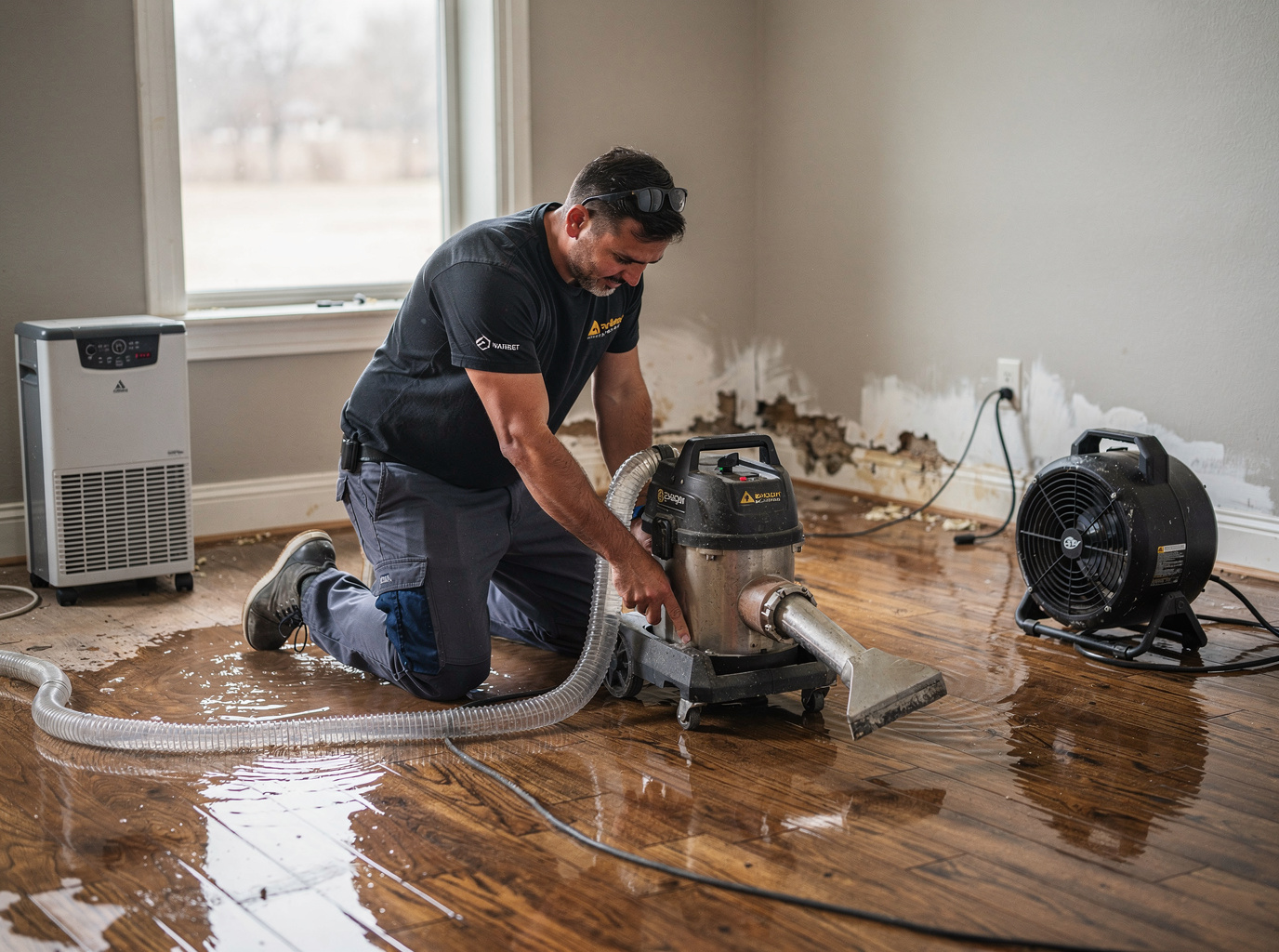
Fort Worth's humid subtropical climate brings hot summers that slow evaporation and mild winters that still allow pipe bursts in older homes. Properties in Arlington Heights and the Cultural District often feature 1920s–1950s construction with plaster walls and cast-iron plumbing that trap moisture behind surfaces. Crews must pull baseboards and use moisture meters to locate hidden saturation before mold sets in during the long humid season.
Tarrant County terrain near the Trinity River and creeks increases flash-flood risk after heavy rains, especially in low-lying sections of the Stockyards and near TCU Stadium. Historic buildings around Sundance Square have thick masonry that holds water longer than modern framing, requiring extended drying times with commercial air movers and dehumidifiers. Nearby cities like Arlington, Mansfield, and Keller share similar soil and weather patterns, so the same extraction protocols apply when calls come from those areas.
Water damage jobs here frequently involve slab leaks common in post-war homes and sewage backups after storms overwhelm older municipal lines. Technicians document affected materials on-site because insurance adjusters want clear photos of saturated subfloors in TCU-area rentals and Stockyards commercial spaces. Proper containment prevents cross-contamination between units in multi-family buildings downtown.
Drying plans account for Fort Worth's wind patterns that can carry humidity from the west, so equipment placement focuses on negative air flow in tight historic layouts. Technicians check for hidden rot in wooden joists under 1940s homes in Arlington Heights before recommending replacement versus drying only.
Technician insight
In Fort Worth the thing that catches most people out with water damage restoration is how long moisture stays trapped inside the thick plaster and lathe walls of 1920s–1940s homes in Arlington Heights and the Stockyards; the humid summers keep humidity high enough that you have to run equipment longer than most homeowners expect or you end up with hidden mold behind the baseboards.
Hidden Moisture Behind Plaster in Arlington Heights
A homeowner in Arlington Heights called after a slow leak under the kitchen sink soaked into the original plaster wall. Inspection found elevated moisture extending three feet up the wall and into the hardwood subfloor. Extraction and targeted drying with air movers behind removed baseboards dried the structure without full wall demolition. The home returned to normal moisture levels within five days.
Water Damage Restoration Services We Offer
✓Emergency Water Extraction
Rapid removal of standing water from homes and businesses in Downtown and the Stockyards using truck-mounted pumps and portable extractors suited to older slab foundations.
✓Structural Drying
Placement of commercial air movers and dehumidifiers to pull moisture from plaster, lath, and hardwood floors common in Cultural District and Arlington Heights properties.
✓Mold Remediation After Water Damage
Containment and removal of mold growth triggered by lingering humidity in Tarrant County homes, with HEPA filtration to protect nearby units.
✓Sewage Cleanup
Safe extraction and disinfection of contaminated water from storm-related backups affecting lower levels near the Trinity River and creek-adjacent neighborhoods.
✓Carpet and Flooring Restoration
Salvage or replacement decisions for saturated carpet, pad, and hardwood in TCU-area rentals and Stockyards commercial spaces after accurate moisture mapping.
✓Basement and Crawlspace Drying
Targeted drying of below-grade spaces in older Fort Worth homes where mild winters still allow condensation and pipe leaks to accumulate.
Water Damage Restoration Cost in Fort Worth, TX
| Service | Typical Range | What Affects It |
|---|---|---|
| Category 1 Clean Water Extraction | $400–$900 | Depends on volume and number of rooms in single-story Arlington Heights homes. |
| Category 3 Contaminated Water Cleanup | $1,200–$2,800 | Higher when sewage reaches finished spaces in multi-unit Downtown buildings. |
| Structural Drying Equipment | $600–$1,500 | Daily rate influenced by length of run needed for thick masonry in Stockyards properties. |
| Mold Remediation Add-On | $800–$2,200 | Varies with square footage and containment requirements in humid summer conditions. |
Ranges are typical for Fort Worth, TX and confirmed with an exact written quote before any work starts.
How it works
- 1
On-Site Assessment
Technician inspects affected rooms, measures moisture in walls and floors, and notes construction type typical of the neighborhood.
- 2
Water Removal
Extraction equipment pulls standing water while protecting historic finishes in Stockyards and Downtown buildings.
- 3
Drying And Monitoring
Equipment runs with daily moisture readings until levels match unaffected areas in the same Tarrant County home.
- 4
Restoration
Replace or repair damaged materials and return the space to pre-loss condition with attention to local building practices.
Pricing
Upfront quotes after inspection; price varies by water category, affected square footage, and access in older homes.