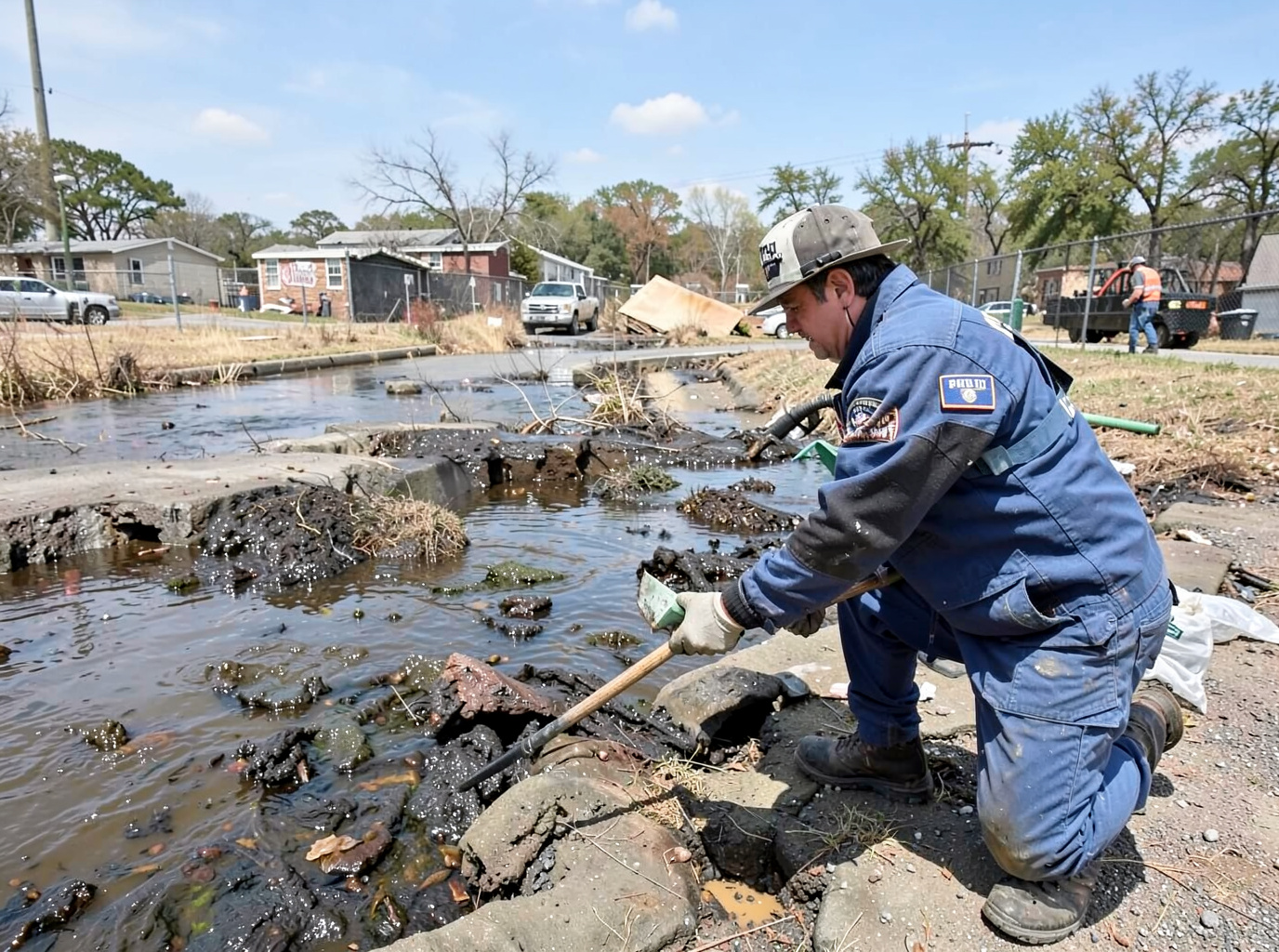
Fort Worth homes built before 1970 in Arlington Heights and near the Stockyards often have clay or cast-iron lines that crack from soil movement in the Trinity River floodplain. When these lines back up, sewage can migrate under slab foundations common in Cultural District bungalows, requiring targeted slab-edge extraction rather than simple surface cleaning. The area's humid subtropical summers accelerate bacterial growth on wood subfloors and drywall, so crews must remove affected materials within 24 hours to prevent hidden mold colonies between layers.
Heavy spring rains combined with aging municipal lines in Downtown and near TCU Stadium frequently cause backups that affect both residential and small commercial buildings. Technicians test for cross-contamination into HVAC returns, a common issue in two-story homes in Mansfield and Keller where ductwork runs through crawl spaces. Proper disposal follows Tarrant County health department guidelines for Category 3 water, including double-bagging solids and documenting chain of custody for landfill acceptance.
In neighborhoods like Arlington Heights, narrow lots limit equipment access, so crews often use portable extraction units and negative-air machines staged on sidewalks. Post-cleanup verification includes moisture mapping with infrared cameras to confirm wall cavities behind tile in older bathrooms are dry before reconstruction begins. Homeowners in these areas should avoid DIY attempts because improper handling can aerosolize pathogens into living spaces.
Technician insight
In Fort Worth the thing that catches most people out with Sewage Backup Cleanup is how quickly the humid subtropical air drives mold into the cavities of 1950s Arlington Heights homes once sewage reaches the slab edge. Older cast-iron lines under the Stockyards district shift with clay soil after every heavy rain, so backups often travel farther than homeowners expect before we arrive.
Arlington Heights Slab Backup
A 1962 bungalow near the Cultural District experienced a main-line backup after spring rains. Sewage had wicked under the slab edge and into the bathroom subfloor. Crews extracted standing water, removed 18 linear feet of affected drywall and flooring, sanitized the cavity, and dried the space over three days before reconstruction.
Sewage Backup Cleanup Services We Offer
✓Residential Sewage Extraction
Removes contaminated water and solids from homes in Arlington Heights and TCU using truck-mounted and portable units sized for narrow lots.
✓Black Water Sanitization
Applies EPA-registered disinfectants to floors, walls and fixtures after backups common in Stockyards area older plumbing.
✓Slab Edge Contamination Removal
Extracts sewage that migrates under foundations in Downtown and Cultural District properties with clay soil movement.
✓Crawl Space Sewage Cleanup
Treats backups that reach under-floor areas in two-story homes near TCU Stadium and in Keller.
✓HVAC Cross-Contamination Remediation
Cleans and restores ductwork after sewage aerosols enter returns during humid summer events in Mansfield.
Sewage Backup Cleanup Cost in Fort Worth, TX
| Service | Typical Range | What Affects It |
|---|---|---|
| Initial Assessment And Extraction | $350–$750 | Depends on volume and whether slab access is needed in older neighborhoods. |
| Full Residential Cleanup | $1,800–$4,500 | Includes removal of drywall, sanitization, and drying for typical 1,800 sq ft homes. |
| Crawl Space Or HVAC Work | $800–$2,200 | Added when contamination reaches under-floor areas or ductwork. |
| Disposal And Documentation | $200–$450 | Required for Category 3 waste handling in Tarrant County. |
Ranges are typical for Fort Worth, TX and confirmed with an exact written quote before any work starts.
How it works
- 1
Site Assessment
Technicians inspect affected rooms, test moisture in walls and slabs, and map the path of contamination in Fort Worth homes.
- 2
Water And Solids Extraction
Portable and truck-mounted equipment removes standing sewage while containing runoff on narrow lots typical of Arlington Heights.
- 3
Sanitization And Removal
Apply disinfectants, cut out saturated drywall and flooring, then bag and dispose of Category 3 materials per local rules.
- 4
Drying And Verification
Industrial air movers and dehumidifiers dry cavities, followed by infrared scans to confirm dryness before rebuild.
Pricing
Pricing varies by scope, access, and materials affected; most residential jobs in Fort Worth fall between initial visit and multi-day drying.