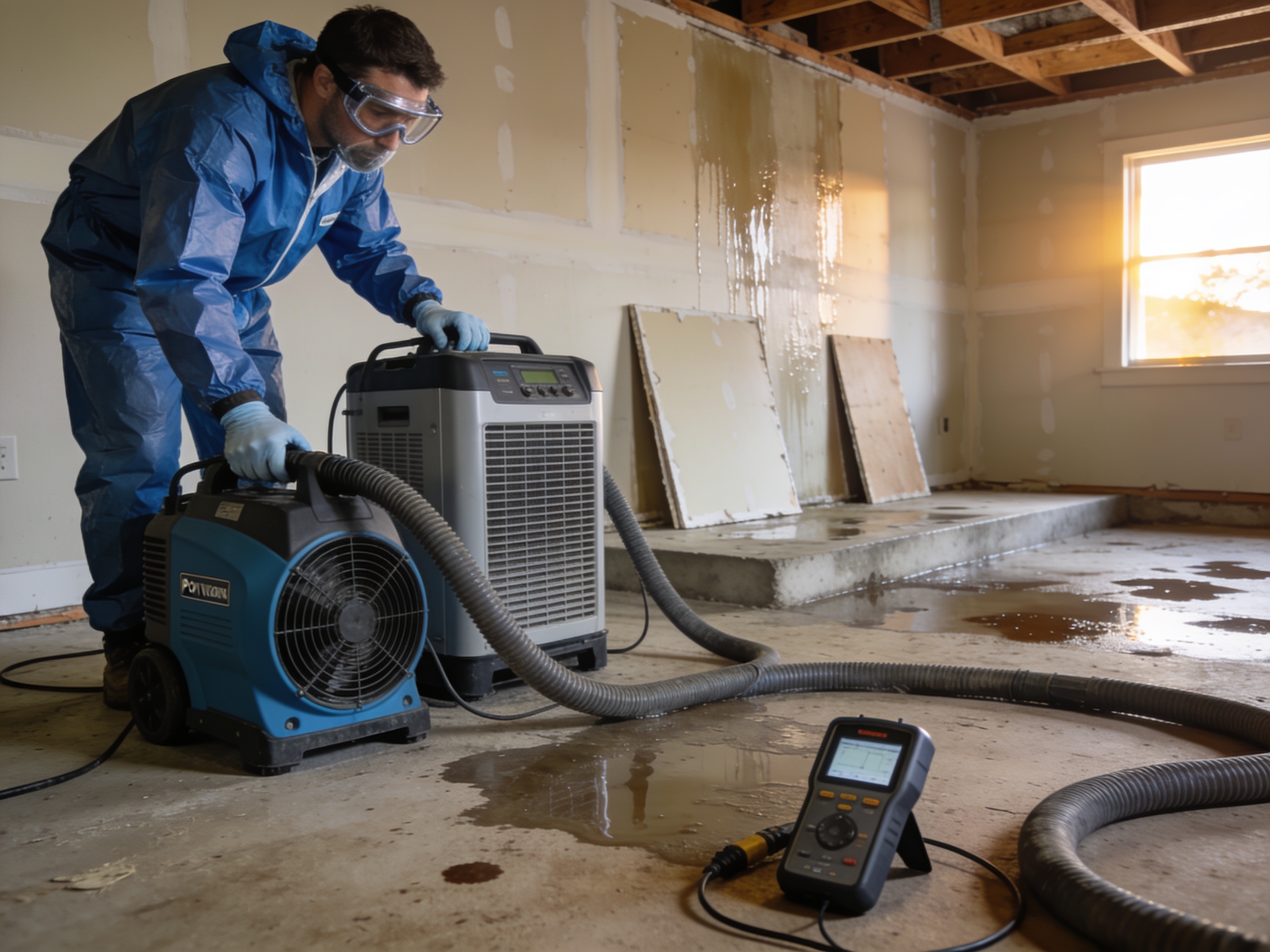
Fort Worth's humid subtropical climate keeps relative humidity high even in mild winters, so water that soaks into lath-and-plaster walls or pier-and-beam subfloors in older Downtown and Arlington Heights homes dries far slower than newer construction. Without extraction and directed airflow, moisture lingers behind baseboards and under hardwood, feeding mold within 48 hours. Technicians place air movers and dehumidifiers in patterns that follow the actual moisture gradient rather than guessing from surface readings alone.
Many Stockyards and Cultural District properties still have original brick or limestone foundations that wick groundwater after heavy rains; once water reaches the sill plate it travels along joists into TCU-area bungalows built on clay soils that expand and contract. Drying these assemblies requires monitoring both wood moisture content and ambient humidity because closing the house too soon traps vapor. Equipment must run until readings drop below 12 percent on multiple probes, not just until the room feels dry.
Power availability in older Sundance Square buildings can limit the number of 110-volt units that can run simultaneously, forcing crews to stage drying in sections. In slab-on-grade homes common in Mansfield and Keller, water under tile or luxury vinyl plank demands perimeter drilling or subfloor access points so negative-pressure drying can pull moisture from the slab edge. Skipping these steps leaves hidden saturation that later causes cupping or adhesive failure.
Technician insight
In Fort Worth the thing that catches most people out with structural drying is how fast humidity climbs again once the equipment leaves older plaster walls in Arlington Heights or Stockyards buildings. Clay soils around the foundation keep feeding moisture back into the sill plate for days after the rain stops, so we often have to run units longer than homeowners expect.
Pipe Leak Under Hardwood in Cultural District Bungalow
Water from a supply line seeped under oak floors and into the subfloor overnight. We mapped saturation extending eight feet into two rooms and placed air movers under the floor through drilled access points. After four days of continuous drying the wood moisture content dropped below 12 percent across all probes and the homeowner could reinstall the finish flooring without cupping.
Structural Drying Services We Offer
✓Moisture Mapping and Documentation
Pinpoint hidden saturation with thermal imaging and pin meters across every affected wall, floor and ceiling so drying targets the actual wet zones instead of whole rooms.
✓Industrial Dehumidification Setup
Place commercial LGR units sized for Tarrant County humidity loads to pull vapor from plaster, hardwood and insulation without over-drying delicate historic finishes.
✓Directed Air Circulation
Position air movers in patterns that create consistent airflow behind cabinets, under vanities and through wall cavities common in Arlington Heights homes.
✓Subfloor and Crawlspace Drying
Extract moisture from pier-and-beam spaces and slab edges where Fort Worth clay soils keep foundations damp long after surface water is gone.
✓Post-Dry Verification Testing
Re-check moisture levels with multiple probes after equipment removal to confirm readings stay below 12 percent before any reconstruction begins.
Structural Drying Cost in Fort Worth, TX
| Service | Typical Range | What Affects It |
|---|---|---|
| Moisture mapping visit | $150–$350 | Larger or multi-story homes in older neighborhoods take longer to map. |
| Daily equipment package | $250–$600 | Number of dehumidifiers and air movers needed changes with humidity and material type. |
| Crawlspace or subfloor drying | $400–$900 | Access difficulty and length of time equipment must stay increase the range. |
| Final verification testing | $100–$200 | Required on every job before any finishes are reinstalled. |
Ranges are typical for Fort Worth, TX and confirmed with an exact written quote before any work starts.
How it works
- 1
Initial Assessment
Walk the property and document moisture migration through walls, floors and ceilings using meters and thermal cameras.
- 2
Water Extraction
Remove standing water and pull saturated carpet pads before setting up drying equipment.
- 3
Equipment Placement
Install air movers, dehumidifiers and air scrubbers in patterns matched to the building's construction and current humidity.
- 4
Daily Monitoring
Return each day to adjust equipment, record moisture readings and confirm progress until levels stabilize.
- 5
Final Verification
Perform final probe and meter tests across all affected materials before releasing the space for repairs.
Pricing
Cost depends on square footage affected, depth of saturation and how many days equipment must run.