2026-11-06 · David Soto
How To Check For Hidden Moisture After Spring Storms Near The Trinity River
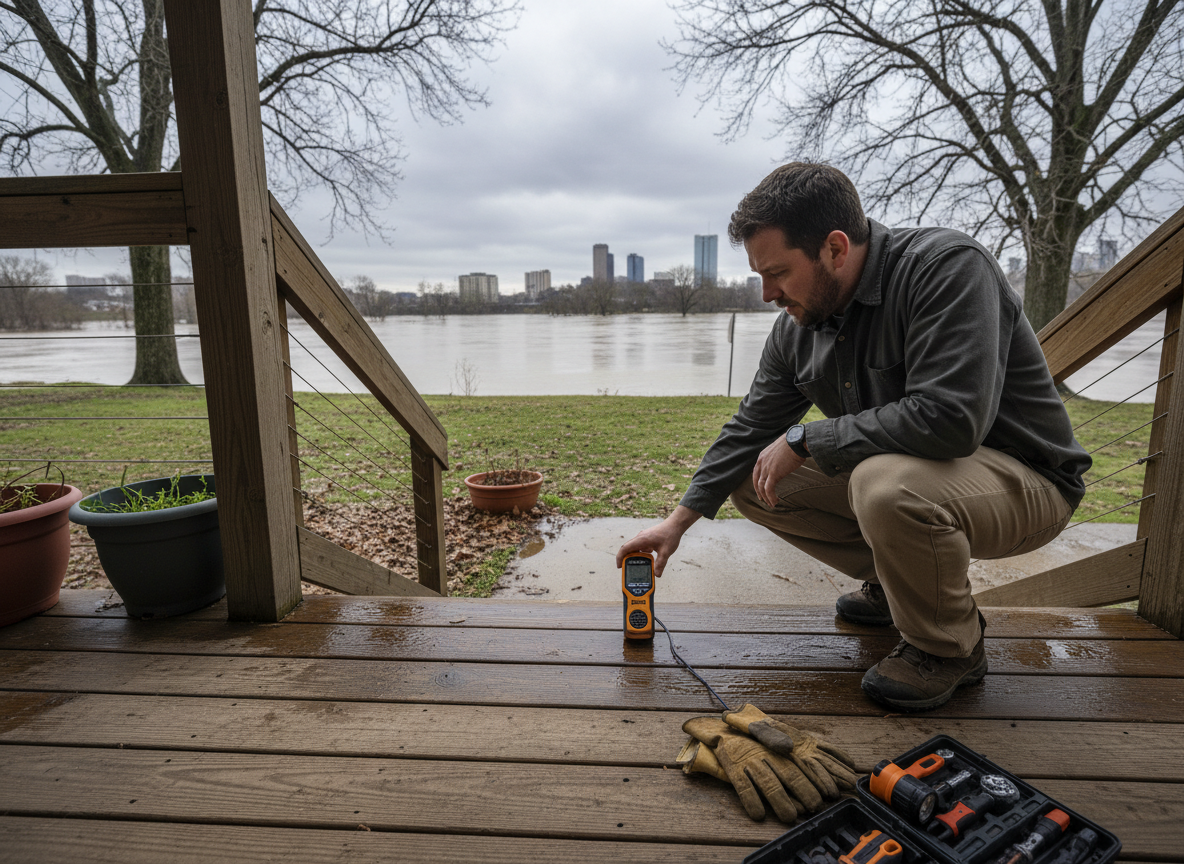
After spring storms near the Trinity River, begin checking for hidden moisture within 48 hours by taking readings with a pin-type moisture meter on baseboards and drywall in affected rooms, targeting levels under 15 percent in wood framing to catch issues early in humid subtropical conditions.
Inspecting Walls and Ceilings Near the Trinity River
Spring rains swell the Trinity River and push water into crawl spaces and lower levels of homes in Downtown and the Stockyards. Older construction in Arlington Heights often features plaster walls over lathe that trap moisture behind surfaces. Run a moisture meter vertically every 12 inches along exterior walls facing the river, noting any readings above 20 percent that indicate seepage from saturated soil. In the Cultural District, check ceilings below flat roofs where wind-driven rain during storms can enter through small penetrations. Document each reading with photos and timestamps so patterns emerge across rooms. Homes in nearby Arlington and Mansfield share similar brick and frame builds that hold water in insulation for weeks after river levels drop. Repeat checks after 72 hours because initial drying from mild winter temperatures can mask deeper pockets that later feed mold in humid conditions.
Checking Floors and Subfloors in Tarrant County Homes
Floodwaters from the Trinity River commonly wick into hardwood and tile floors in TCU area properties and the Stockyards historic district. Lift a corner of area rugs or remove baseboards to access subfloor edges with a pinless meter, scanning for elevated readings in plywood or particleboard that sits directly on concrete slabs common in post-1950s builds. In Arlington Heights bungalows, check under kitchen cabinets where pipes may have leaked during pressure surges from storm runoff. Measure at multiple points across a 10-foot span because moisture often pools unevenly near foundation walls. Properties in Keller and Mansfield with pier-and-beam foundations require crawling under the structure to test joists, as trapped humidity lingers longer in these enclosed spaces than in slab homes. Track readings over three days to confirm whether levels drop naturally or require mechanical intervention.
Monitoring for Secondary Moisture Damage
Hidden moisture left after Trinity River overflows frequently leads to mold on the back side of drywall in humid subtropical weather that follows spring storms. Place data loggers in closets and behind furniture in affected rooms to record relative humidity above 60 percent over 48-hour periods. In Sundance Square lofts and TCU student housing, inspect HVAC return vents for condensation streaks that signal elevated indoor moisture migrating from river-adjacent lots. Older Stockyards buildings with limestone foundations retain groundwater longer, so test soil moisture 6 inches from the exterior wall using a soil probe meter. Cross-reference findings with visible staining on ceilings near the Kimbell Art Museum vicinity where flat roofs are prevalent. Consistent readings above baseline indicate the need for targeted drying rather than simple airing out.
When Professional Assessment Becomes Necessary
If moisture meter readings remain above 18 percent after five days or if musty odors develop in any Tarrant County neighborhood near the river, professional equipment provides the next level of detection. Structural drying crews use infrared cameras to locate pockets behind tile in bathrooms common to Arlington Heights homes. Mold remediation becomes relevant once hidden growth appears in insulation following repeated spring flooding events. Review the related guide on winter freeze pipe bursts for overlapping cost factors that also apply after storm events. Properties in Mansfield and Keller benefit from the same systematic approach used in Fort Worth proper because soil types and construction eras align closely across the county.