2026-11-06 · David Soto
Local Considerations For Water Damage In Neighborhoods Around Lake Worth
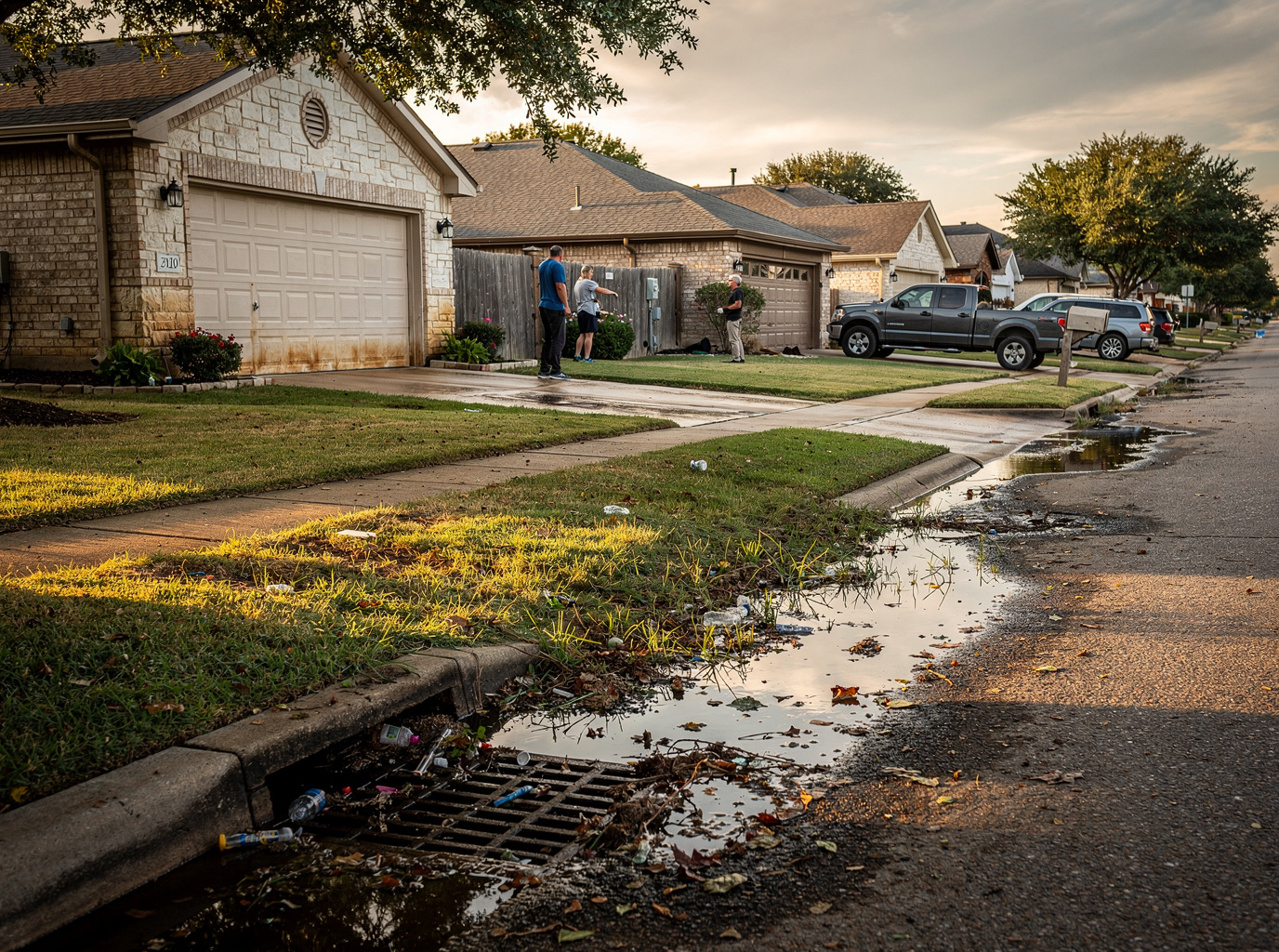
Water damage in neighborhoods around Lake Worth typically requires longer extraction times and targeted dehumidification because of the high water table and clay-heavy soils that hold moisture against foundations for weeks after rain.
Groundwater Levels Near the Lake
Lake Worth sits in a basin where the water table stays close to the surface year-round, especially in sections bordering the Cultural District and Arlington Heights. Crews frequently encounter seepage through slab edges and crawl spaces that standard pumps miss because the clay does not drain quickly. In these areas, moisture readings often stay elevated for 10–14 days after a storm even when surface water is gone. Technicians place sensors at multiple depths and run air movers at lower velocities to avoid pushing humid air into wall cavities. Homes built before 1970 in these neighborhoods commonly lack vapor barriers, so water migrates farther into subfloors. This pattern repeats in pockets near the Stockyards where older grading directs runoff toward foundations rather than away from them.
Humidity and Seasonal Patterns
Fort Worth’s humid subtropical climate keeps relative humidity above 65 percent from April through October, slowing evaporation around Lake Worth more than in drier parts of Tarrant County. Mild winters still bring occasional freezes that crack pipes in uninsulated Arlington Heights homes, while summer thunderstorms dump 2–4 inches in an hour and overwhelm local drainage. After spring rains near the Trinity River, hidden moisture behind baseboards often goes unnoticed until mold appears. Crews therefore combine moisture meters with infrared scans on every job. When humidity lingers, drying times extend from the usual 3–5 days to 7–10 days, requiring extra equipment rotation and daily monitoring to prevent secondary damage.
Housing Stock and Construction Realities
Many homes surrounding Lake Worth date from the 1940s to 1960s and feature pier-and-beam foundations or slab-on-grade with minimal perimeter drainage. In Arlington Heights and near TCU, settled soil creates low spots that collect water against brick veneer. These older builds often have plaster walls that absorb and hold water differently than modern drywall, so removal decisions must be made within 48 hours to limit swelling. Newer infill near Sundance Square uses tighter envelopes that trap vapor when leaks occur. Restoration teams therefore adapt equipment placement—under cabinets, inside knee walls, and along shared walls in duplexes—to match each structure’s actual construction rather than applying one template.
Working With Nearby Cities and Drainage
Properties in Mansfield and Keller that sit on the same clay belt experience similar prolonged drying but face different municipal storm systems. When Lake Worth levels rise, backflow through storm drains affects lower-lying streets in these cities, pushing water into garages and utility rooms. Crews coordinate with local public works to time pumping after city crews clear main lines. In these cross-city jobs, documentation of water migration paths helps homeowners understand why drying equipment must remain longer than expected. Linking to detailed post-storm checks helps residents spot residual moisture before it leads to larger repairs.
Practical Next Steps for Property Owners
Homeowners around Lake Worth benefit from checking crawl-space vents after heavy rain and ensuring downspouts discharge at least 5 feet from the foundation. When readings exceed 18 percent moisture content in framing, professional extraction prevents hidden growth that later requires mold remediation. For persistent issues after storms, see the guide on checking for hidden moisture after spring storms near the Trinity River. Structural drying protocols tailored to local soils and climate reduce callbacks and keep repair scopes smaller. Contact Fort Worth Water Damage Restoration at 505 Main St during business hours for assessments that account for these specific neighborhood conditions.